
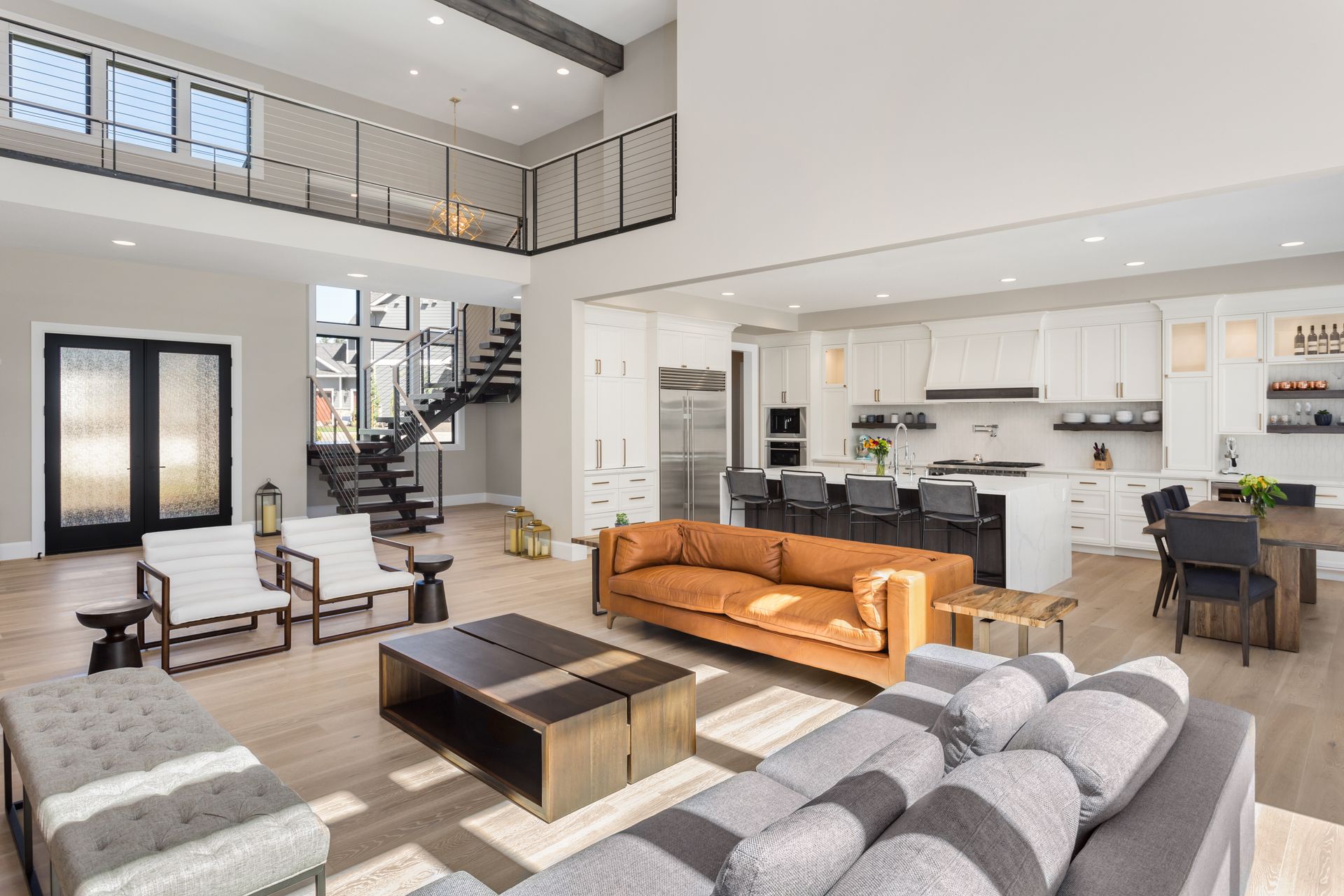
Interiors That Function Before They Decorate
Interior design in Service tab for spaces that prioritize workflow, storage capacity, and how rooms are actually used
A poorly planned interior forces you to work around furniture placement, inadequate lighting, or storage that doesn't match what you need to store. Ricoflow Home Services handles interior design by first mapping how you move through and use each room, then developing layouts that support those patterns. The design process in Service tab addresses practical concerns like electrical outlet placement for where you'll actually use devices, task lighting at work surfaces, and cabinet configurations that fit your specific storage needs rather than standard dimensions.
Interior design services involve space planning to determine furniture arrangement and traffic flow, lighting design that layers ambient, task, and accent fixtures, and material selection for surfaces that will see daily wear. Designers create floor plans showing exact furniture dimensions and clearances, elevations that detail built-in cabinetry and wall treatments, and finish schedules specifying flooring, paint colors, countertop materials, and fixture selections.
Arrange an on-site evaluation to review your existing space and functional requirements.
How Interior Design Addresses Daily Use Patterns
The interior design process starts with measuring existing room dimensions, noting window and door locations, and documenting structural elements like columns or load-bearing walls that can't be moved. Your designer asks detailed questions about how many people use each space simultaneously, what activities happen there, and what items need to be stored. Space planning determines whether furniture can be arranged to create clear circulation paths, adequate task zones, and visual separation between different activity areas within open layouts.
After the design is implemented, you'll see that furniture fits properly with room to move around it, that lighting reaches work surfaces without glare, and that storage accommodates your specific belongings rather than forcing you to reorganize what you own. Electrical outlets appear where you actually set up devices, switches are located where you naturally reach when entering rooms, and counter heights match the tasks performed there. The color palette and material selections create visual cohesion without requiring you to replace existing furnishings that still function well.
Interior design also coordinates with contractors when work involves moving walls, adding windows, or installing built-in elements. The designer provides detailed drawings showing cabinet dimensions, hardware specifications, tile layout patterns, and trim profiles so that installed elements match the design intent. Material selections account for maintenance requirements and durability in high-traffic areas rather than focusing solely on appearance.
Common Questions About This Service
Interior design projects raise questions about scope, budget allocation, and how design services integrate with construction work.
What's the difference between interior design and interior decorating?
Interior design addresses spatial layout, lighting systems, material selection for installed finishes, and built-in elements like cabinetry. It often involves coordinating with contractors for construction work. Interior decorating focuses on furnishings, window treatments, accessories, and surface-level changes that don't require construction. Design services include space planning and technical drawings, while decorating emphasizes aesthetic coordination of movable elements.
How do interior designers work with existing furniture and belongings?
Designers measure your current furniture to determine what fits in the new layout and what needs replacement due to size constraints. They identify pieces that can be reupholstered or refinished rather than replaced, and incorporate existing items that you want to keep into the overall design scheme. The design accommodates storage for belongings you already own rather than requiring you to reduce what you have.
What should I budget for implementing an interior design?
Design fees typically represent ten to fifteen percent of the total project cost, with the remainder covering materials, labor, and furnishings. A kitchen redesign in Service tab that includes new cabinetry, countertops, flooring, and appliances requires substantially more budget than a living room refresh involving paint, lighting updates, and new furniture. Designers provide cost estimates during the design phase so you can adjust scope before committing to purchases.
When should interior design happen in relation to construction work?
Interior design should be completed before construction begins so that layouts inform electrical and plumbing rough-in locations, wall placements, and built-in dimensions. Starting design after framing is complete limits options and often requires change orders. For renovation projects, design happens after demolition reveals existing conditions but before new construction starts.
How does lighting design affect the functionality of interior spaces?
Lighting design determines whether you have adequate illumination for tasks like food preparation, reading, or detailed work. It addresses whether fixtures create glare on screens, whether ambient light levels feel comfortable for different times of day, and whether switches control lights logically based on how you enter and use rooms. Proper lighting design layers multiple fixture types rather than relying on single overhead fixtures.
Ricoflow Home Services creates interior designs based on detailed space analysis and how your household functions daily. Schedule a design consultation to discuss your space planning needs and project goals.